The end for Data For Action
As we close DFA we are sharing what we have learned and putting all the last materials in one place


Hello!
Some news from us at Data For Action (which you may or may not know about already!). Mr Tom French has decided to be gainfully employed and taken up a rather excellent and important role at SYMCA and as we started Data For Action together, we are closing together. So after 3 years we are in the process of shutting down.
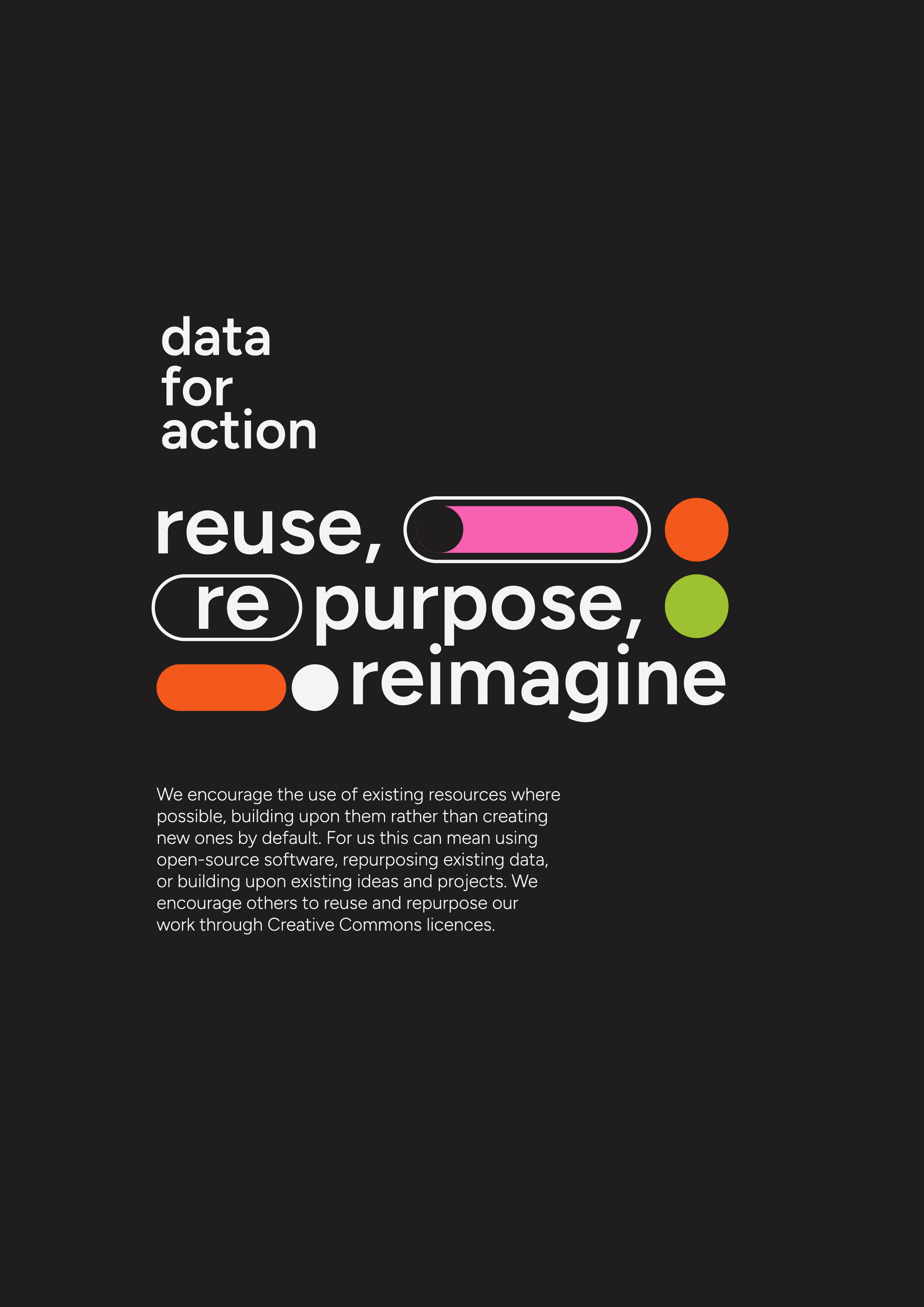
But as we like to live to our Principles (one of which is Reuse, re-purpose, re-imagine) we wanted to end in a good way, by sharing the things we learned and the things we did along the way.
So Tom W wrote a piece about what we learned and maybe what we hope people take from our work over on https://tomcw.xyz/
Here’s an exert
What We Learned About Working Differently
We Chose Uncertainty, and It Made Our Work Better (but made it harder to actually make money)
One of our core ideals was to lean into uncertainty. We didn’t go into projects with preconceived solutions. We asked better questions. We prototyped. We experimented. And yes, this probably cost us some contracts - funders and clients often want the comfort of certainty, especially when budgets are tight. But the work we did produce was deeper, more contextual, and more likely to actually work because it emerged from real conversations with real people.
One thing I learned through all of our work was this: the best results come from being open to possibilities. Going in with a preconceived idea may be easier to deliver, but it likely won’t be the best outcome. The tension you feel when you don’t know exactly where a workshop will lead? I think that’s a feeling that tells you you’re pushing at the boundaries of what’s possible and I think this is a good place to be.
What I hope others do differently: Reward uncertainty. Fund discovery. Value questions as much as answers. The sector’s tendency to demand certainty before releasing resources means we often fund safe, predictable work that doesn’t actually shift the needle.
Data and Maps as Conversations, Not Just Outputs
We developed a way of thinking that fundamentally changed how we approached our work: data as conversations and maps as conversations.
When we worked with people in Sheffield to map their neighbourhoods, this wasn’t a technical approach, we weren’t just drawing boundaries - we were creating spaces for people to talk about place, belonging, and what matters to them. We built Map My Patch to support this work, allowing communities to define their own places rather than accepting administrative boundaries that meant nothing to them.
When we developed the question-based approach for the Insight Infrastructure work, we created Questions For Action - a tool that takes users through our questions-based approach, helping teams move from ‘what data do we need?’ to ‘what questions are we trying to answer?’
This shift from static outputs to dynamic conversations meant that our work could evolve, be owned by communities, and continue long after we moved on.
What I hope others do differently: Stop treating data and maps as finished products. They’re conversation starters. They’re ways of bringing people together to discuss what matters, what’s changing, and what we might do about it.
You can read the rest (if you are so interested ) on the link here https://tomcw.xyz/the-end-of-data-for-action/
We also set about bringing our various project repositories together in one place to reuse, re-imagine and re-purpose to your hearts content. One of the decisions we made early on was to openly record the things we did in projects along the way. This was incredibly useful for two reasons
Within projects it’s really useful to understand the journey and the decisions made along the way. Organisational memory can be patchy!
As we close down, it’s much easier to share this stuff! It’s very hard to try and do this at the end.
So my advice would be to think about endings at the start of everything.
So here is a link to things we did along the way at Data For Action
We also wanted to ensure the lasting place for the boundaries files for Sheffield Neighbourhoods had an open place to sit. So we put them here
So, finally. Thanks to everyone we worked with, who helped us, who contributed and who said nice things.
Tom W will still be around doing many of the same things so if you are interested in that type of stuff you will find him here and writing here.
Tom F is off to his new job, but still doing the good work.
And this substack will go back to sleep.
And if nothing else always remember
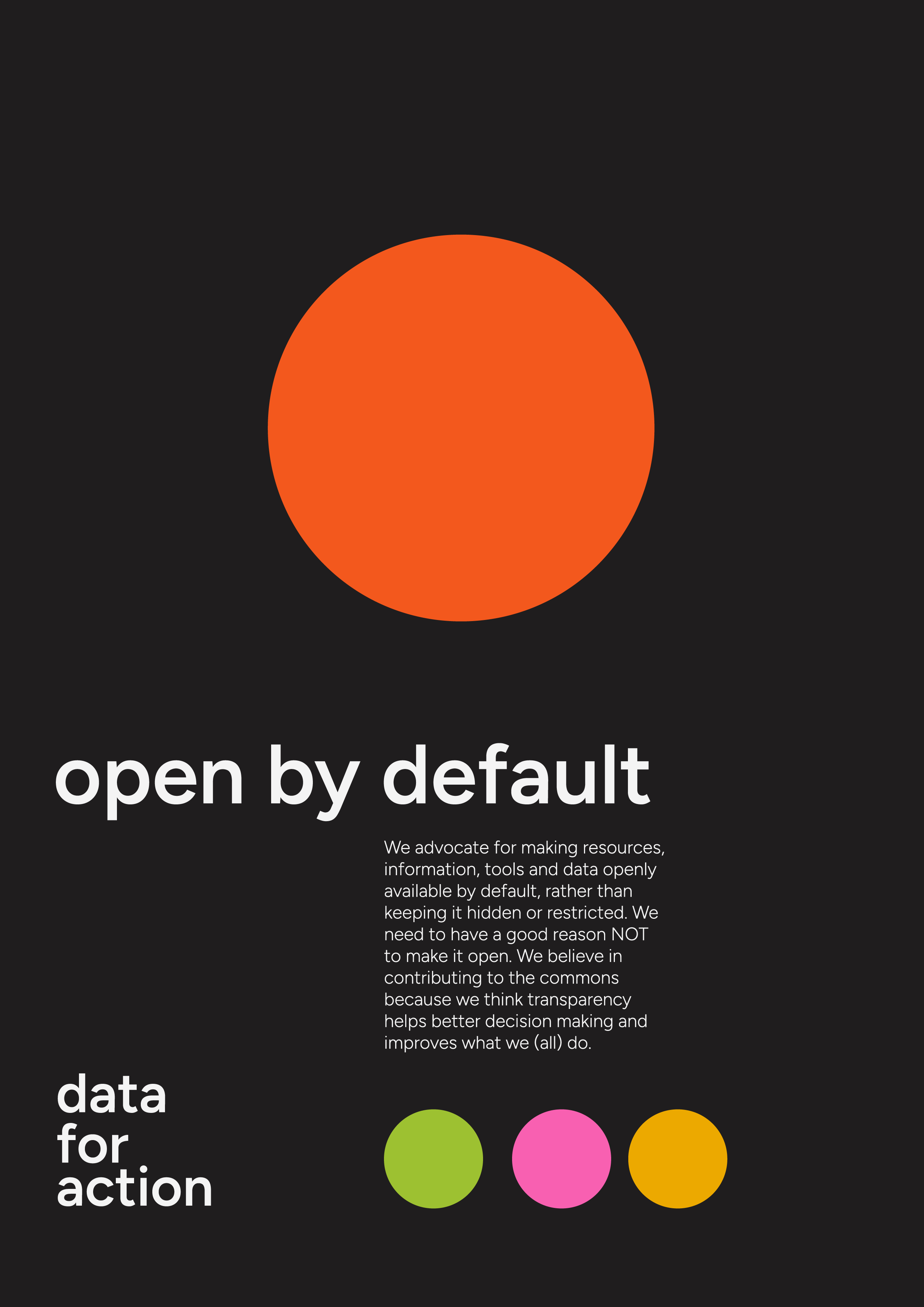
But more importantly